
Written by: T.P., 14
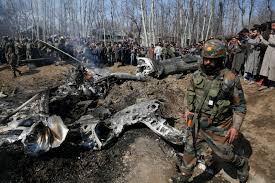
After eons of conflict dating back to the 1947 partition of India, I am tired of another one starting because of a senseless act of violence in Pahalgam! In Jammu & Kashmir, there has always been an Indian side and a Pakistani side, but now this issue is being portrayed as a battle of religions. However, that is simply not the case.
The conflicts between India and Pakistan relate to the government actions versus another, but also how the governments have continued to act. Since the government of Pakistan broke the ceasefire, it is becoming apparent that US mediation may not be enough, unless both parties can come to the table and both realize what potential actions that could cause harm in the future. This is the interjection that Pahalgam’s attack needs to provide. As soon as the culprits behind the attack are revealed, then the parties in question would be able to trust each other.
This is of course nullified if one of the parties was responsible. Therefore, for full transparency, it can’t be governments that are handling this but instead the people who are represented. Ideally, where everyone knows the real facts of the conflict. Another reason why this is imperative is because civilians are the ones that would be the most affected! Unfortunately, this brings modern diplomacy into light: how is it that trust is so seldom acquired in normal negotiation? This is because countries have gotten to know each other and their tactics. Every time a bad action or misinformed decision is taken, it affects each country’s goodwill with others. Similarly, as Pakistan broke the ceasefire, it will be hard for India to work with them toward finally resolving this conflict. So, trust in diplomacy must come with many tiers: trade, militarily, and civilian.
This post was written by a TYP fellow in response to the following prompt: what’s your reaction to a recent news event, and what do you make of the implications it has on society?
Posts do not contain the TYP fellow’s name in order to prevent bullying, harassment, or online identification of the Youth Fellow.


 The Youth Perspective
Leave a comment